
















柴天佑院士接受国际顶级期刊《IEEE Control systems magazine》专访
2025/10/20
 430
430近日,国际电气与电子工程师协会(IEEE)旗下的自动化与控制领域的官方顶级期刊IEEE Control Systems Magazine专访了中国工程院院士、东北大学柴天佑教授,并对流程工业综合自动化全国重点实验室建设情况进行了详细报道。
在本期内容中,我们采访了中国东北大学流程工业综合自动化国家重点实验室的柴天佑教授。柴天佑教授是中国工程院院士,他创建并领导了该实验室的建设,目前担任该实验室学术委员会主任。
In this issue, we talk with Professor Tianyou Chai about the activities of the State Key Laboratory of Synthetical Automation for Process Industries at Northeastern University, China. Professor Chai, an academician of the Chinese Academy of Engineering, founded and led the development of this laboratory. He currently serves as the Chair of its Academic Committee.
问:能否简要介绍一下您的国家重点实验室?
我们的实验室可以追溯到1992年成立的东北大学自动化研究中心,于2013年通过科技部验收,正式成为国家重点实验室。实验室以东北大学国家重点建设一级学科、国家一流建设学科——控制科学与工程为依托,面向流程工业高端化智能化绿色化的国家重大需求,以综合自动化与智能化系统理论和技术体系、智能优化决策和控制一体化理论与关键技术为主攻方向,不断创新机制,实现全国重点实验室与国家工程技术中心的有机结合,形成基础研究—前沿高技术—成果转化和促进基础研究的快速通道。目前,实验室有成员近百人,研究生200余人。
CSM: Can you provide a brief overview of your State Key Laboratory?
Our laboratory traces its origins to the Automation Research Center of Northeastern University, established in 1992. In 2013, it was officially recognized as a State Key Laboratory following an evaluation by the Ministry of Science and Technology. Building on Northeastern University’s nationally prioritized first-tier discipline and world-class construction discipline—Control Science and Engineering—the laboratory addresses critical national demands for high-end, intelligent, and sustainable development in the process industry.
Our primary research focuses include the theoretical and technological framework of integrated automation and intelligent systems, as well as the integrated theory and key technologies for intelligent optimization, decision-making, and control. Through continuous innovation in its operational mechanisms, the laboratory achieves an organic integration of State Key Laboratories and National Engineering Technology Centers. This integration establishes an efficient pathway for advancing from fundamental research to cutting-edge high technology, and ultimately to technology transfer, while simultaneously promoting the development of foundational research. The laboratory currently consists of nearly 100 faculty members and over 200 graduate students.
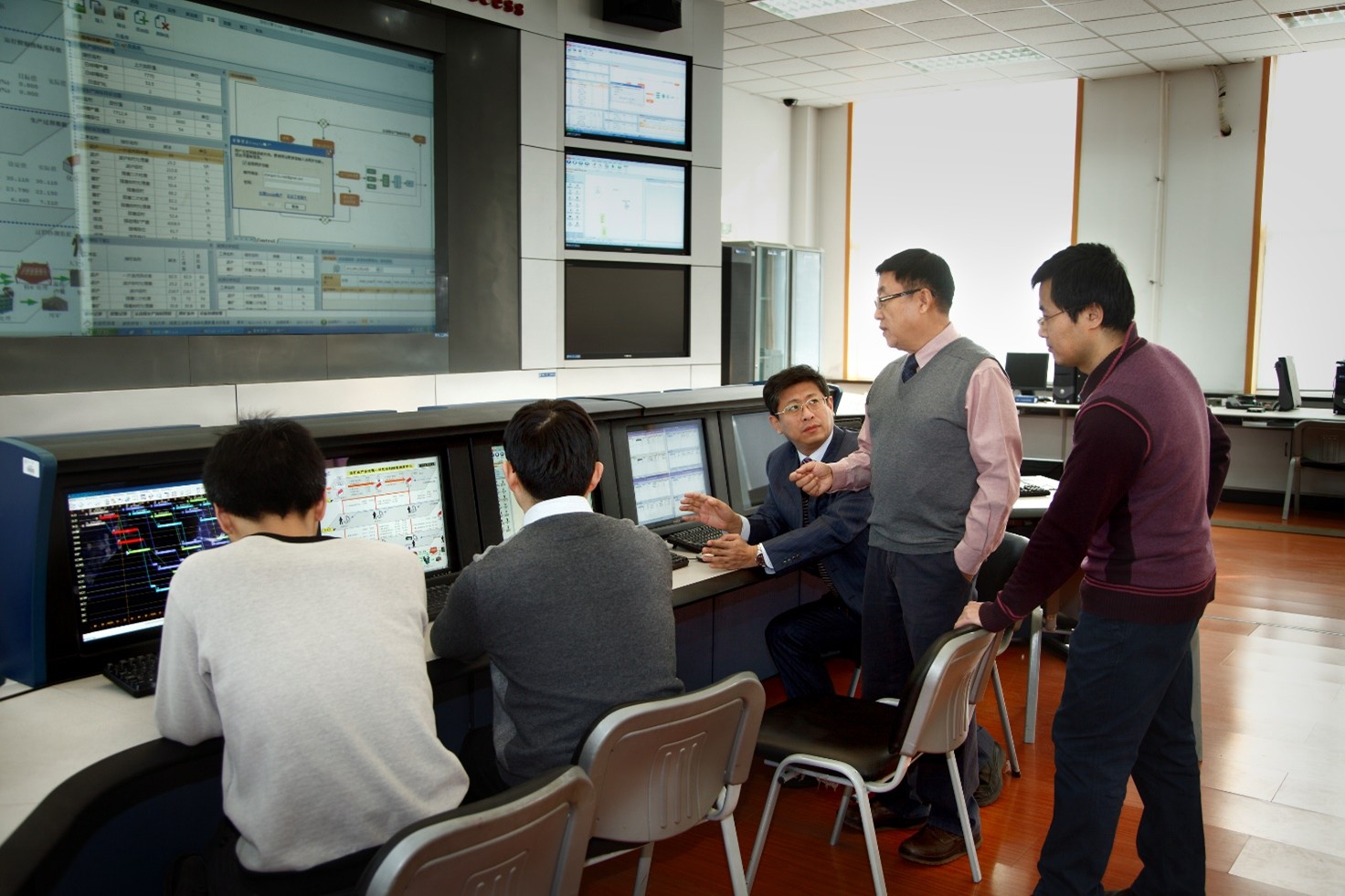
柴天佑教授与实验室成员和学生进行学术讨论
Professor Tianyou Chai engaging in an academic discussion with laboratory members and students.
问:能否阐述贵实验室的使命与研究目标?
实验室面向流程工业高端化智能化绿色化的重大需求,瞄准国际自动化、工业人工智能和工业互联网科技前沿,围绕重大原始创新和关键核心技术突破,开展基础研究与前沿高技术研究。实验室主要从事如下方面的研究工作:(1)将工业互联网、工业人工智能与流程工业综合自动化深度融合,发展流程工业综合自动化与智能化系统理论与技术体系;(2)建立人工智能驱动的复杂过程工业智能建模、控制、优化理论与方法;(3)建立流程工业综合自动化和智能化系统的应用示范,引领中国(特别是东北地区)流程工业智能制造发展方向。
CSM: Can you define your lab’s mission and objectives?
The laboratory is dedicated to addressing the critical demands for high-end, intelligent, and sustainable development in process industries. It focuses on the global frontiers of automation, industrial artificial intelligence, and industrial internet technologies, conducting fundamental research and cutting-edge high-tech studies with an emphasis on achieving major original innovations and breakthroughs in key core technologies.
Our primary research areas include: (a) The deep integration of industrial internet, industrial artificial intelligence, and comprehensive automation in process industries, aiming to develop theoretical and technological frameworks for comprehensive automation and intelligent systems in these industries. (b) Establishing artificial intelligence-driven theories and methods for intelligent modeling, control, and optimization of complex industrial processes. (c) Developing application demonstrations of comprehensive automation and intelligent systems for process industries, serving as a guide for the advancement of intelligent manufacturing in process industries, particularly in the northeastern region of China.
问:请您简要介绍一下实验室的学术贡献?
实验室自成立以来坚持面向流程工业高端化、智能化、绿色化重大需求,以难以建立数学模型的复杂工业系统为对象,以实现流程工业智能优化制造为目标,针对多层次多尺度多目标工业动态系统优化控制这一自动化领域挑战难题,开展基础理论研究与应用研究,创立了流程工业综合自动化系统理论与技术体系,包括在生产全流程多目标动态优化决策与控制一体化、分布式动态系统自学习优化协同控制和非线性切换系统分析与控制等理论方法,仅2024年实验室在IEEE汇刊和IFAC会刊发表论文100余篇。实验室构建了端边云协同的复杂生产过程综合自动化与智能化系统技术体系,包括系统体系架构、运行工况智能感知、抗5G随机传输时延的自学习与自优化智能控制、运行决策与控制一体化系统参数自学习自优化、数字孪生与工业元宇宙相结合的复杂生产过程动态仿真等关键技术。30件发明专利通过专利许可方式实现成果转化,金额1.47亿元。研究成果获国际国内科技奖励,包括:3项国家自然科学奖,5项国家技术发明奖,5项国家科技进步奖。
CSM: Could you provide a brief overview of the laboratory’s academic contributions?
Since its establishment, the laboratory has focused on addressing the critical demands of the process industry for high-end development, intelligence, and sustainability. Targeting complex industrial systems that are challenging to model mathematically, the laboratory aims to achieve intelligent optimization and manufacturing in the process industry. It conducts fundamental and applied research to address the complex challenges of optimizing and controlling multi-level, multi-scale, and multi-objective dynamic industrial systems in the field of automation.
The laboratory has pioneered a theoretical and technological framework for integrated automation systems in the process industry. This includes theoretical methods such as integrated multi-objective dynamic optimization, decision-making, and control for the entire production process; self-learning and collaborative optimization control for distributed dynamic systems; and analysis and control of nonlinear switched systems. In 2024, the laboratory published over 100 papers in IEEE Transactions and IFAC journals.
Furthermore, the laboratory has developed a technological framework for comprehensive automation and intelligent systems in complex production processes, based on end-edge-cloud collaboration. Key technologies include system architecture design, intelligent perception of operational conditions, self-learning and self-optimizing intelligent control to mitigate 5G random transmission delays, self-learning and self-optimizing system parameters for integrated operational decision-making and control, and dynamic simulation of complex production processes by combining digital twins with the industrial metaverse.
The laboratory has successfully transferred 30 invention patents through licensing agreements, generating a total revenue of 147 million RMB. Its research achievements have been recognized with numerous international and domestic scientific and technological awards, including three National Natural Science Awards, five National Technological Invention Awards, and five National Science and Technology Progress Awards.
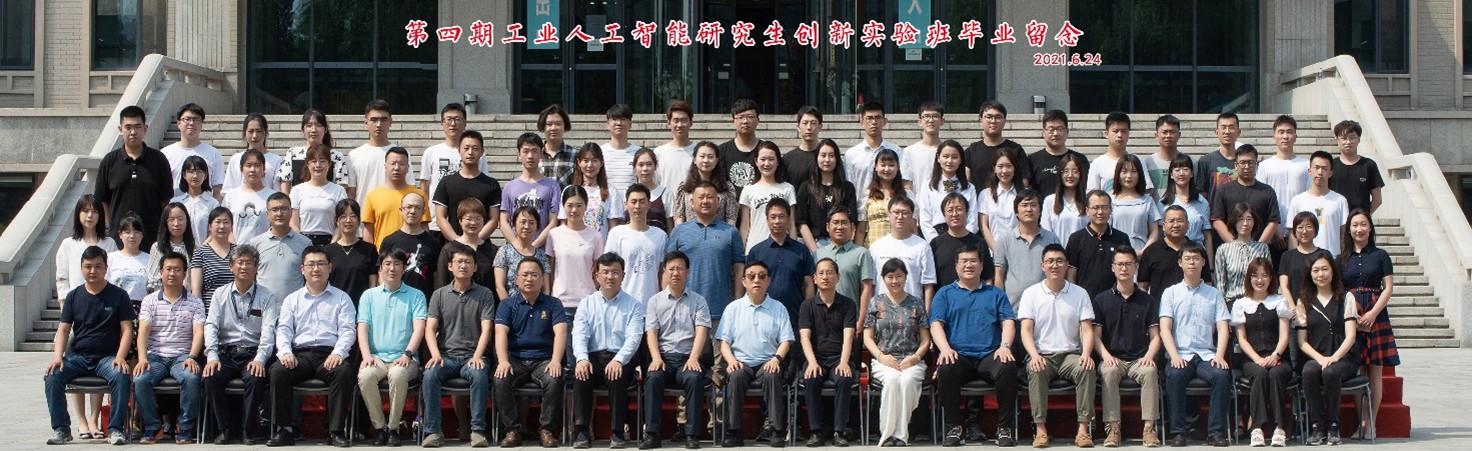
实验室成员与2021届毕业生合影
Group photo of laboratory members and the Class of 2021 graduates.
问:能否介绍一下贵实验室在推动控制和自动化在工业应用方面做了哪些工作?
本实验室长期致力于将生产全流程多目标动态优化决策和控制一体化理论方法与冶金、选矿、选煤、电力等企业自动化与智能化的需求相结合,研发了复杂生产过程综合自动化与智能化系统技术体系,在我国首个金矿企业(排山楼金矿)、首个赤铁矿选矿企业(酒钢)、首个铝土矿选矿企业(中州铝厂)、首个选煤企业(融德)等建立了综合自动化系统应用示范,研发的控制与自动化技术成功应用于国内宝钢、首钢、鞍钢等41家(70%钢铁企业)钢铁企业,华兴、信发等10余家氧化铝生产企业,电力行业中11个省份的86家配电网集控子站和发电企业,石化行业中石油和中石化集团20多省的21条管线、100多输油站。
CSM: Could you elaborate on the efforts your laboratory has made in advancing the industrial applications of control and automation?
The laboratory has been deeply committed to integrating the theoretical methods of multi-objective dynamic optimization, decision-making, and control for the entire production process with the automation and intelligence needs of industries such as metallurgy, mineral processing, coal preparation, and power generation. It has developed a comprehensive technological system for automating and enhancing the intelligence of complex production processes.
The laboratory has established demonstration applications of integrated automation systems in several pioneering enterprises in China. These include the first gold mining enterprise (Paishanlou Gold Mine), the first hematite mineral processing enterprise (Jiuquan Steel Plant), the first bauxite mineral processing enterprise (Zhongzhou Aluminum Plant), and the first coal preparation enterprise (Rongde Coal Preparation Plant).
The control and automation technologies developed by the laboratory have been successfully applied across a wide range of industries. These include 41 steel enterprises—accounting for 70% of China’s steel industry—such as Baosteel, Shougang, and Ansteel; more than 10 alumina production enterprises, including Huaxing and Xinfa; 86 centralized control substations and power generation enterprises across 11 provinces in the power distribution network; and in the petrochemical industry, 21 pipelines and over 100 oil transportation stations operated by Petro China and Sinopec across more than 20 provinces.
问:您谈到了许多不同场景的应用。能否具体介绍一项典型的技术及其应用场景和产生的效益?
实验室近年来将研发的运行优化决策与控制一体化理论与技术同大数据驱动的人工智能和工业互联网深度融合,采用智能传感、5G、边缘计算和工业云与PLC的计算机管控系统,研发了多源异构信息动态感知与机器学习、基于大数据的质量、能耗、设备等生产要素监控、预测与溯源和智能优化决策与控制一体化关键技术和优化决策与控制的工业人工智能平台,在罕王选矿生产线和新发展电熔镁砂生产线研发了智能优化决策与控制一体化智能系统,取得显著经济效益。使罕王选矿的铁精矿品位提升0.18%,金属回收率提升2.09%,单吨能耗下降6%,增加利润约9000万元,在疫情期间发挥了重要作用,实现生产线无人值守、生产管理与决策移动化、疫情期间不停产,2020年精矿产量与品位、金属回收率、产值、利税均好于2019年。
CSM: You mentioned applications in various scenarios. Could you provide a detailed introduction to a specific technology, including its application context and the benefits it has generated?
In recent years, the laboratory has integrated its theories and technologies for operational optimization, decision-making, and control with big data-driven artificial intelligence and the industrial internet. By leveraging intelligent sensing, Fifth-Generation Mobile Communication Technology (5G), edge computing, and industrial cloud-based PLC computer management and control systems, the laboratory has advanced key technologies. These include dynamic perception of multi-source heterogeneous information through machine learning, big data-based monitoring, prediction, and traceability of production factors (e.g., quality, energy consumption, and equipment), as well as the integration of intelligent optimization, decision-making, and control. Additionally, the laboratory has developed an industrial artificial intelligence platform for optimization, decision-making, and control.
This platform has been successfully implemented in integrated intelligent systems for optimization, decision-making, and control on the Hanwang mineral processing production line and the Xinfazhan fused magnesia production line, generating significant economic benefits. At Hanwang Mining (ranked among the Global Iron Ore Top 50), the system increased the iron concentrate grade by 0.18%, improved the metal recovery rate by 2.09%, and reduced per-ton energy consumption by 6%, resulting in annual gains exceeding ¥90 million.
During the 2020 pandemic, this technology enabled 24/7 unmanned operation of production lines. The mobile decision-making system ensured that key production metrics—including concentrate output, metal recovery rate, production value, and tax contributions—exceeded 2019 levels, demonstrating its resilience and effectiveness in challenging circumstances.
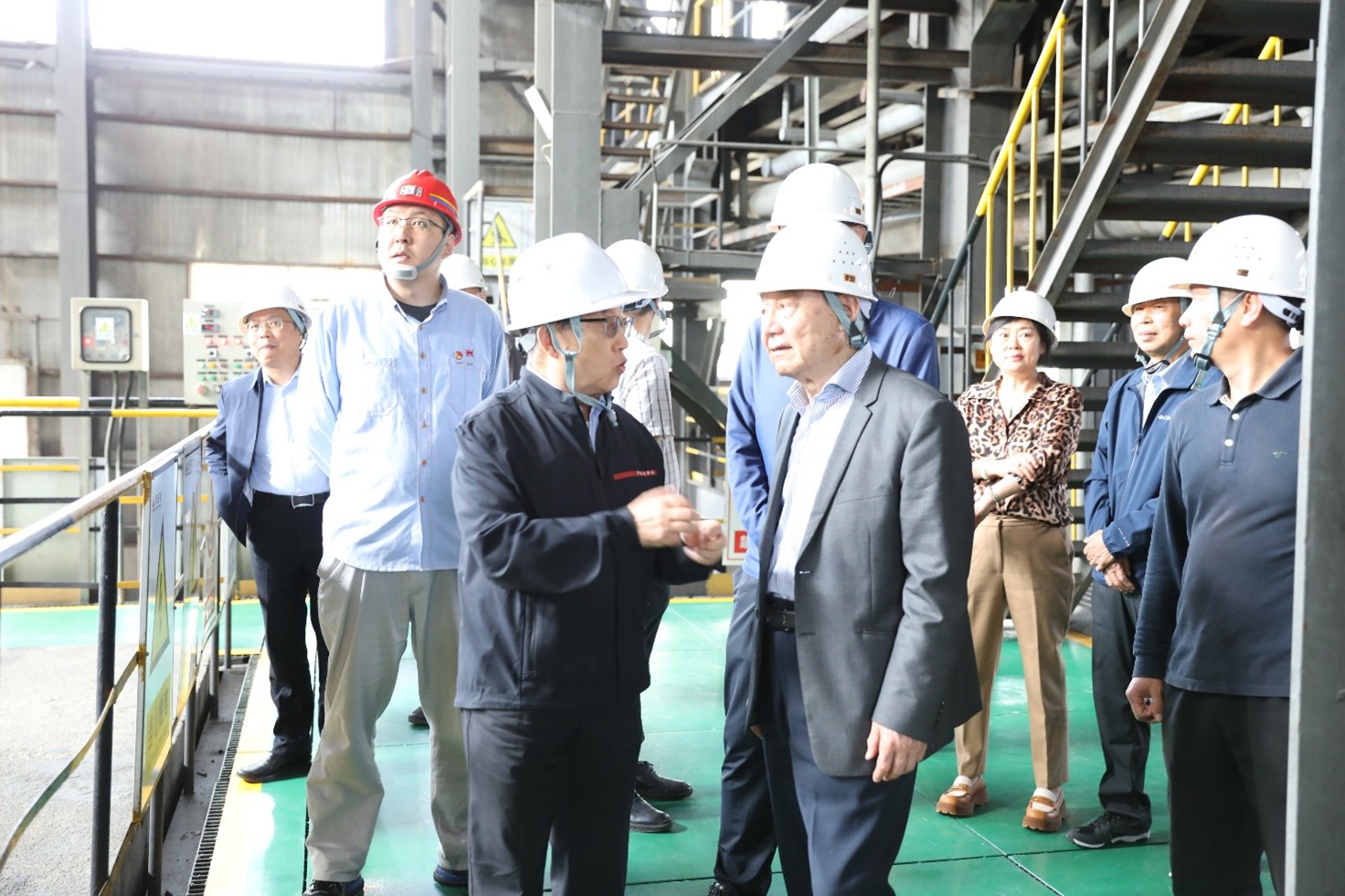
柴天佑教授和实验室成员在工厂调研
Professor Tianyou Chai and laboratory members conducting a field study at a factory.
问:可否简要谈一谈实验室未来想做哪些方面的研究?
未来,实验室将建立人工智能驱动的复杂工业系统智能建模、智能控制与智能优化决策理论与核心算法和智能优化决策与控制一体化理论与核心算法,创立流程工业综合自动化与智能化系统理论。具体将攻克智能决策与控制一体化系统关键技术和工业人工智能与工业互联网协同发展的流程工业综合自动化与智能化系统关键技术,建立相应的技术体系。建立引领流程工业智能化发展方向的应用示范,为高技术公司研发自主可控的基于新一代信息技术的智能化决策与控制系统提供支撑。
CSM: Could you briefly discuss the areas of research the laboratory plans to focus on in the future?
In the future, the laboratory aims to establish foundational theories and core algorithms for artificial intelligence-driven intelligent modeling, intelligent control, and intelligent optimization decision-making for complex industrial systems. It also seeks to develop integrated theories and core algorithms for intelligent optimization decision-making and control, paving the way for a comprehensive automation and intelligent system theory tailored to process industries.
Specifically, the laboratory will focus on addressing key technologies for integrated intelligent decision-making and control systems, as well as critical technologies for the coordinated development of industrial artificial intelligence and the industrial internet within comprehensive automation and intelligent systems for process industries. This effort will result in the creation of a robust technological framework.
Additionally, the laboratory plans to develop application demonstrations that set the direction for intelligent advancements in process industries. These efforts will provide strong support for high-tech companies to design and implement intelligent decision-making and control systems based on next-generation information technologies.
问:可否简要介绍一下实验室在国际交流与合作方面的经验?
本实验室依托111引智基地汇聚国际控制界领军人物和著名专家开展国际合作,承担科技部、国家自然科学基金国际合作重大(重点)项目等30余项,取得复杂工业过程双时间尺度智能运行优化控制方法等创新成果,在IEEE汇刊和IFAC会刊联合发表论文100余篇,联合举办重要国际会议10余次,产生重要影响。一流的研究创新平台、科研环境和生活服务保障,吸引了百余位国际知名大学和公司的知名专家来基地合作。仅2020年10月在沈阳举行的第六届工业人工智能前沿论坛上,来自美国、加拿大、英国、法国、德国、瑞典、澳大利亚、日本、新加坡、中国香港等国家和地区60余位著名专家学者(其中院士10余位,IEEE Fellow、IFAC Fellow 40余位),围绕智能优化、智能建模、智能控制、智能机器人、智能系统等方向作前沿论坛报告,共同探讨自动化与人工智能的最新研究进展、行业应用及未来发展。
CSM: Could you briefly share the laboratory’s experiences in international exchange and collaboration?
The laboratory has established a Discipline Innovation and Talent Introduction Base for Higher Education Institutions, known as the “111 Program,” funded by the Ministry of Education of China. Through this program, the laboratory has brought together leading figures and renowned experts from the international control community to conduct collaborative research. It has undertaken over 30 major international cooperation projects funded by the Ministry of Science and Technology and the National Natural Science Foundation of China, achieving innovative breakthroughs, such as intelligent operational optimization and control methods for complex industrial processes on dual time scales.
The laboratory has published more than 100 joint papers in top-tier IEEE and IFAC journals and has co-organized over 10 major international conferences, generating significant impact in the field. With a world-class research and innovation platform, state-of-the-art research facilities, and comprehensive living support, the laboratory has attracted over 100 distinguished experts from internationally renowned universities and companies for collaboration.
For example, at the sixth International Frontier Forum on Industrial Artificial Intelligence held in Shenyang in August 2024, more than 60 renowned experts and scholars—including over 10 academicians and more than 40 IEEE Fellows and IFAC Fellows—from the United States and Europe delivered cutting-edge presentations. Topics included intelligent optimization, intelligent modeling, intelligent control, intelligent robotics, and intelligent systems. Together, they explored the latest research advancements, industrial applications, and future developments in automation and artificial intelligence.
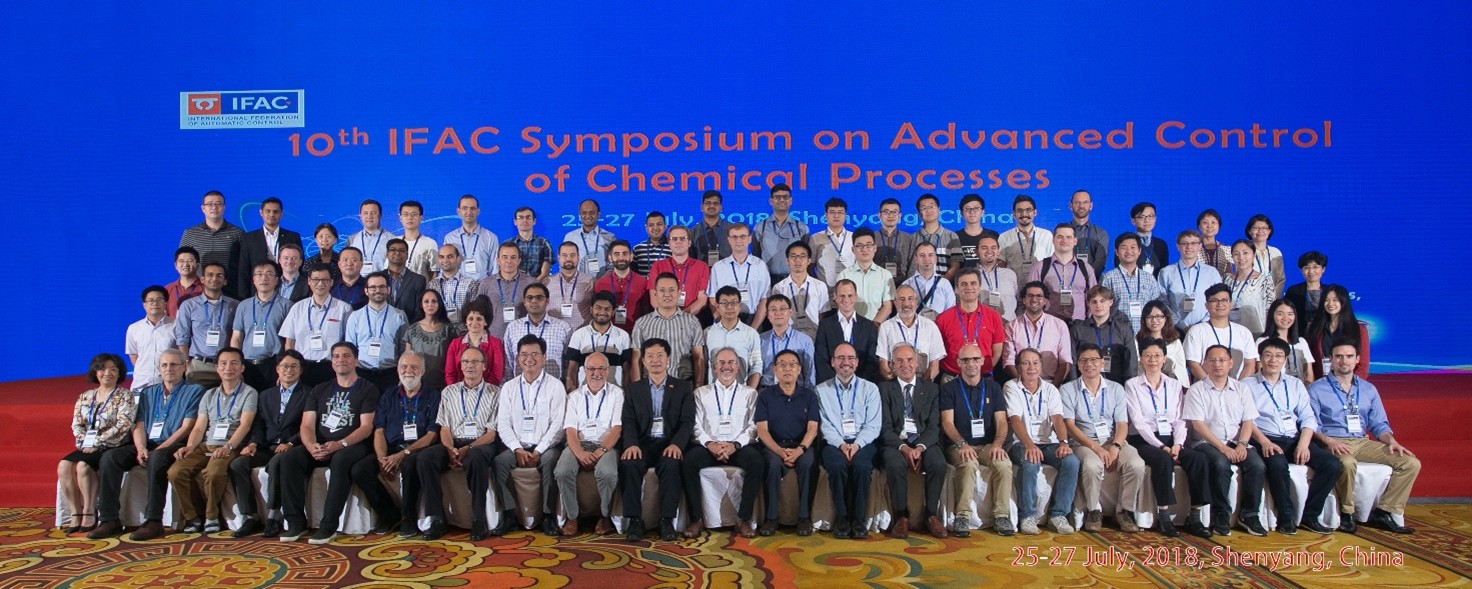
实验室承办第十届IFAC ADCHEM会议期间部分参会代表合影
文章来源 东北大学,分享只为学术交流,如涉及侵权问题请联系我们,我们将及时修改或删除。







-
2026年第十六届电力与能源系统国际 110

-
2026年10月优质国际学术会议推荐 448
-
2026年智能科学与信息物理技术国际 157
-
第五届传感、测量、通信与物联网技术国 548
-
2026年第三届计算机网络与云计算国 3097
-
2026资源、化学化工与应用材料国际 4170
-
2026年图像处理与数字创意设计国际 3855
-
2026年机械工程,新能源与电气技术 8936
-
2026年材料科学、低碳技术与动力工 4359
-
2026智能驾驶、智能传感与无人系统 09-28

-
2026生命健康、精准营养与食品安全 09-28
-
第二届信息学、生物医学与系统生物学国 09-28
-
2026环境资源、清洁能源与可持续发 09-28
-
第三届纺织科学、材料工程与智能制造国 09-28
-
第二届林业工程、环境科学与可持续发展 09-28
































-
2026 JCR影响因子正式发布2049
-
中国科协发布2025年《重要学术2146
-
2026年新锐分区(原中科院期刊10945
-
2025年两院院士增选有效候选人6679
-
好学术:科研网址导航|学术头条分9207
-
2025年国际期刊预警名单发布!9157
-
2025年中科院期刊分区表重磅发30335
-
吉林大学校长张希:学术会议中的提10134
-
清华大学2026年CCF计算经济09-28
-
北京清华长庚医院黄天荫团队合作构09-28
-
中国农业大学资环学院刘学军教授团09-28
-
中国科大实现液晶向列比特的可重构09-28
-
研究提出丽江云杉复合体分类界定新09-28
-
新型多孔压电陶瓷研制取得进展09-28
-
研究揭示二倍半萜衍生物治疗溃疡性09-28
-
ASDC 25036

-
《中国神经再生研究(英文版)》杂 22056
-
CDS 3002
-
人大办公厅老干部处 18734
-
HKSME 24779
-
天津音乐学院 23783
-
香港机械工程师协会 2754
-
BIT 24702
-
荷兰中国商会 19028
-
中国化工信息中心 8579
-
西安爱科赛博电气股份有限公司 24642
-
湖北学而升文化传播有限公司 8805
-
广州比特城建筑工程咨询有限公司 23613
-
农科传媒 8794
-
中国化工学会培训中心 2760
-
长沙高鑫房地产有限公司 18708
-
上海顺展展览服务有限公司 8685
-
中南大学信息科学与工程学院 22043
-
南昌大学基础医学院生化与分子生物 21805
-
中国西点集团 18657


